
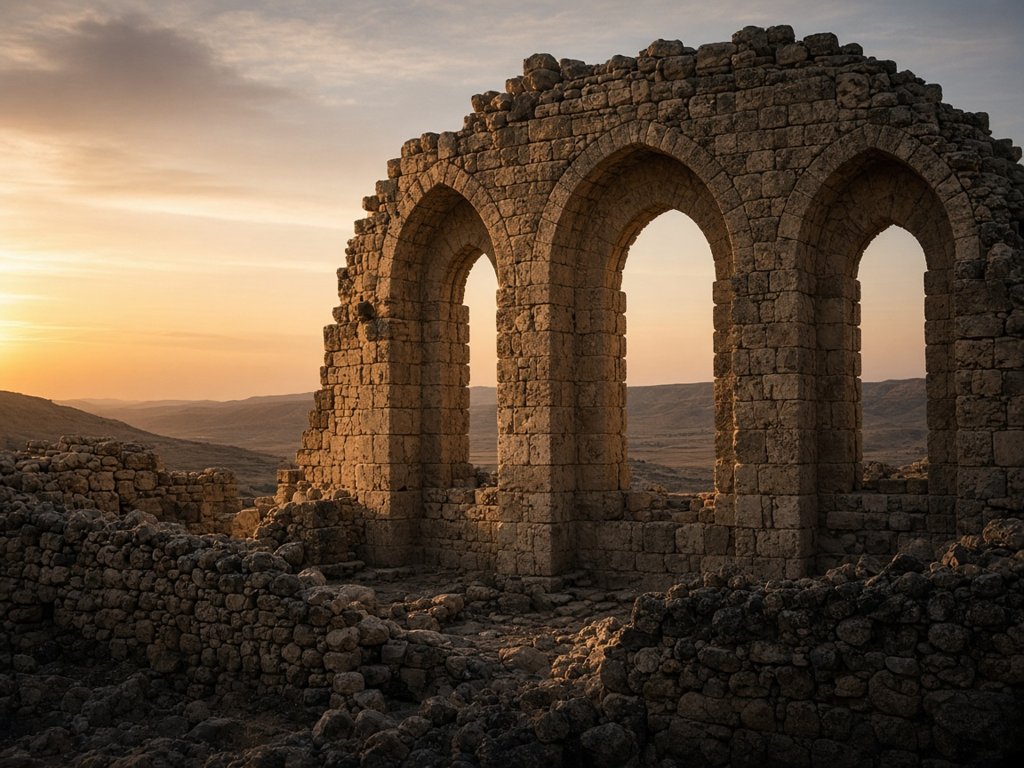
Shivta is an ancient village in the Negev desert that archaeologists have studied for decades. Yet researchers at the University of Haifa have just learned something new there, thanks to a machine-learning method published in the journal PNAS.
The team mapped the site by drone and photographed about 600 standing walls. An AI system then analyzed the images to measure the size and shape of every stone: about 250,000 stones from collapsed walls and 12,000 from standing walls. Until now, this work could only be done by hand, a few buildings at a time.
By combining these measurements with what was already known, the researchers traced the village’s history. It first grew in the south in the 2nd and 3rd centuries, with small houses. Then, between the 4th and 6th centuries, it expanded north and west: larger houses, more regular stones, three churches and other public buildings. Stones in the outer walls are on average 15% larger, and an inner wall appears to mark a previously unknown ancient boundary.
The stones of a village tell the story of those who built it: their means, their priorities, their faith. Even places known for a long time still have something to tell us, if we take the time to look.